
From the first days of his papacy, Pope Leo XIV has identified the emergence of AI as both a
promise of potential and cause of concern. From his choice of papal name to the emphasis of
his early statements, Pope Leo XIV has highlighted that the growth of AI presents the Church
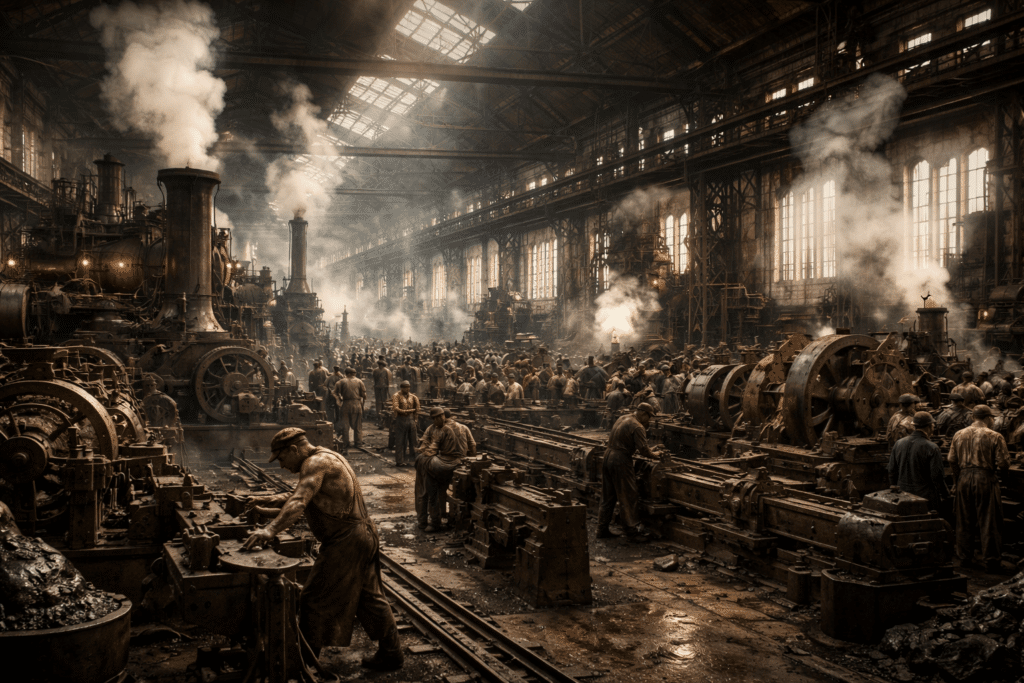
and wider society with a new industrial revolution whose consequences may well chime with
the social and economic changes inaugurated by the various industrial revolutions of the
eighteenth and nineteenth centuries. As papal teaching takes shape, we might ask whether we
should view these ‘new technologies’ as another vehicle for ‘revolutionary change’, and, if
so, are they of a different kind or different degree?
Neither simply an artful imitation of pre-existing technologies nor an alien invasion beyond
our comprehension, the arrival of artificially intelligent technologies seems both substantially
different and significantly similar to past paradigmatic shifts, from the introduction of the
printing press to the construction of canals, factories and railways. Substantially similar in the
sense that technological gains will allow for the more efficient, optimised and potentially
labour-saving optimisation of social and economic activities, with the potential for significant
economic disruption and the reshaping of the labour market as well as the uneven impacts on
different classes and cultures in society. Significantly different in the sense that this new era
of automation touches upon a wider and deeper range of human realities.
If the printing press automated writing, the industrial revolutions automated manufacturing,
then it could well be argued that AI will not only automate a wider range of work but
threatens to automate relationships and even, apparently, humanity itself. Indeed, the
possibility of forming parasocial relations with AI programmes, from chatbots to robotic
embodiments, seems to lie at the cutting edge of the so-called ‘AI revolution’. Where it was
unfulfilling to seek therapy from a printing press, unrewarding to consult a steam engine on
friendship dilemmas, and unsatisfying to develop romantic feelings for a loom, the prospect,
and indeed the reality, of the general public engaging in relational substitution with AI
impersonating a therapist, friend, romantic partner, inter alia, presents strikingly new cultural
changes and pastoral threats, challenges and opportunities.